
 New
Analogue signal conditioning
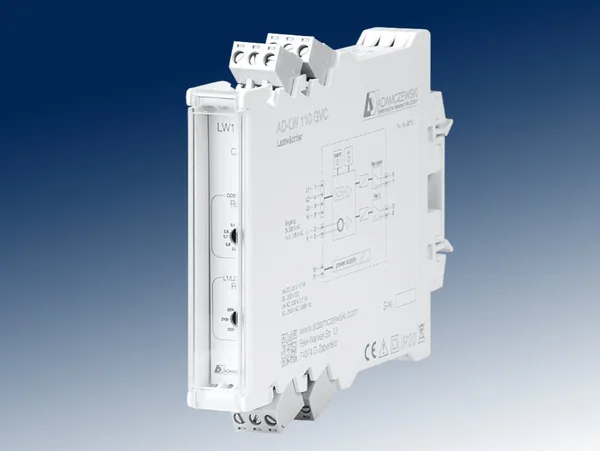
AD-LW 110 GVC
Load monitor for cos phi and undervoltage with adjustable limits
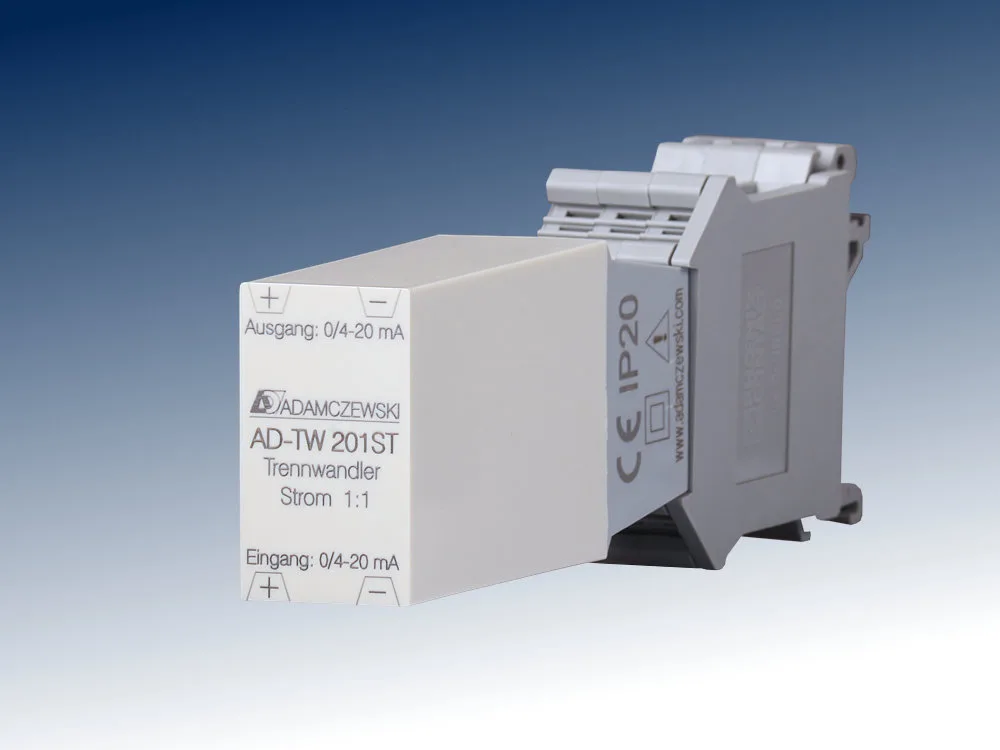
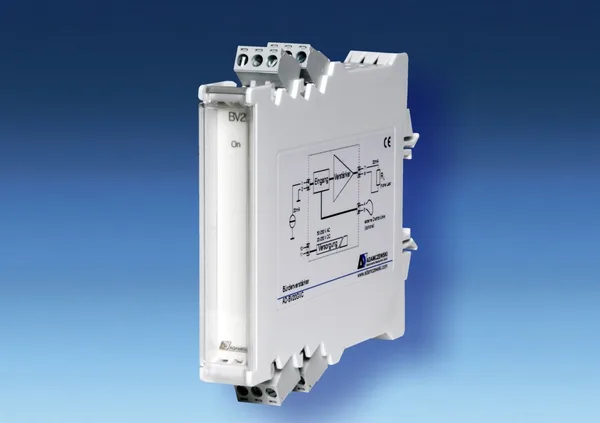
Manufacturer image of the device family. The actual version may differ.
Single-channel analogue 1:1 isolation module for standard current signals, in a plug-in design
Price and delivery time on request. Personal advice from Grubatec.
The AD-TW 201 ST galvanically isolates a standard current signal, transfers it at a 1:1 ratio and draws its operating power from the input signal. When selecting this plug-in module, note that opening the output current loop also opens the input current loop, as this version has no bypass.
| Manufacturer | Adamczewski Elektronische Messtechnik GmbH |
|---|---|
| Model | AD-TW 201 ST |
| Function | Single-channel analogue 1:1 isolation module for standard current signals, in a plug-in design |
| Input | Standard analogue signal input |
| Output | Standard analogue signal output |
| Power supply | Not specified |
| Housing type | ST |
| Input types | Unipolar standard signal |
| Output types | Unipolar standard signal |
| Supply types | none |
| Design | DIN rail, screw terminals |
| Device functions | galvanic isolation (I/O), 1:1 standard signal isolation |
| Measuring range | 0/4 ... 20 mA |
|---|---|
| Input voltage | < 25 V |
| Internal voltage requirement AD-TW 201 ST | < 2.5 V |
| Internal voltage requirement AD-TWB 201 ST | < 3.5 V |
| Start-up current | < 80 µA |
| Output range | 0/4 ... 20 mA |
|---|---|
| Maximum load | 500 Ohm |
| Load error | -0.03% / 100 Ohm |
| Ripple | 0.5 % (500 Ohm; 20 mA) |
| Basic accuracy | < 0,3 % |
|---|---|
| Input / output | 1 : 1 |
| Temperature influence | 50 ppm/K |
| Response time | ~ 20 ms |
| Transmission frequency | 500 Hz (500 Ohm) |
| Dimensions (w×h×d) | 20x30x16.5 mm |
|---|---|
| IP rating | IP 20 |
| Connection technology | Plug-in module |
| Weight | ~ 80 g |
| Ambient temperature | -10 ... 50 °C |
|---|---|
| Storage and transport | -10 ... 70 °C (avoid condensation) |
| Product family standard | EN 61326-1 1) |
|---|---|
| Emissions | EN 55011, CISPR11 class B, group 1 |
| Note | Basic insulation, functional isolation |
|---|---|
| Working voltage | 50 V DC |
| Input/output test voltage | 500 V, 50 Hz (1 min.) |
| Note | 1) Minor signal deviations may occur during interference. |
|---|
Explore further
NewAnalogue signal conditioning
Load monitor for cos phi and undervoltage with adjustable limits
 New
Analogue signal conditioning
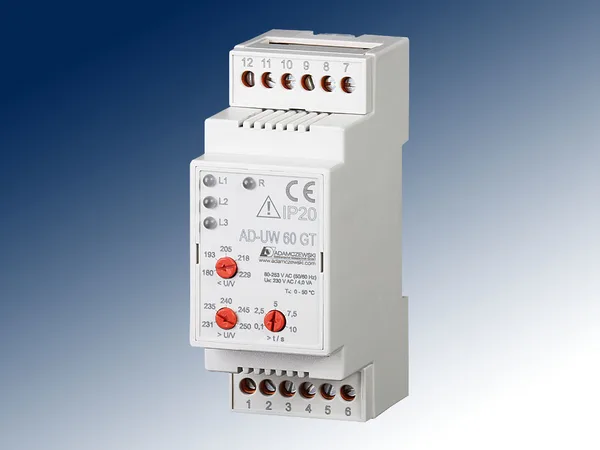
Digital three-phase voltage monitor for phase failure, phase sequence, overvoltage and undervoltage
Analogue signal conditioning
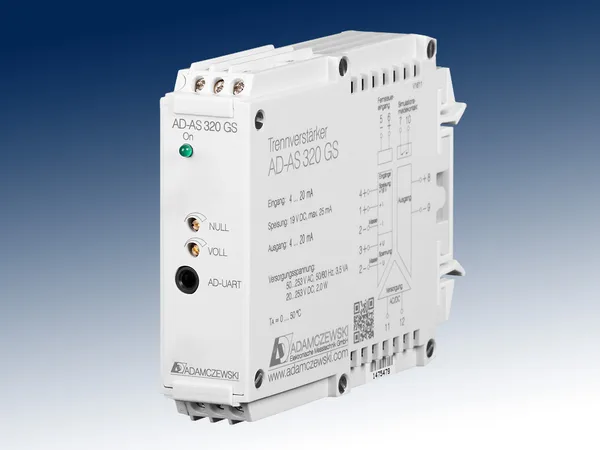
Signal isolator for standard analogue signals with a memory function
Analogue signal conditioning
Load-capacity booster for standard current signals in high-resistance current loops
Unsure about the input signal, output or version? Describe your application to us. Together, we will find the appropriate Adamczewski device.