
 New
 Discontinued
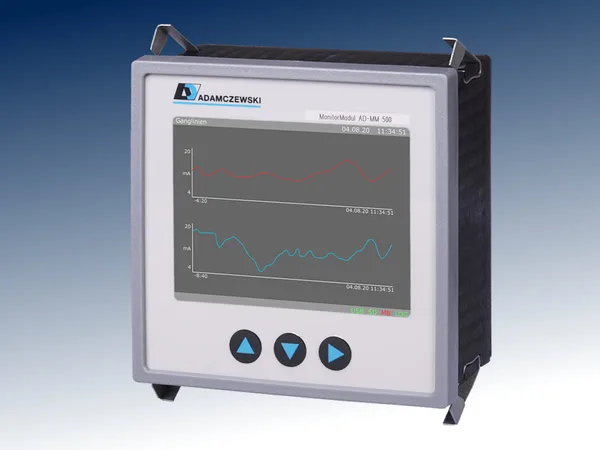
Manufacturer image of the device family. The actual version may differ.
Fieldbus devices
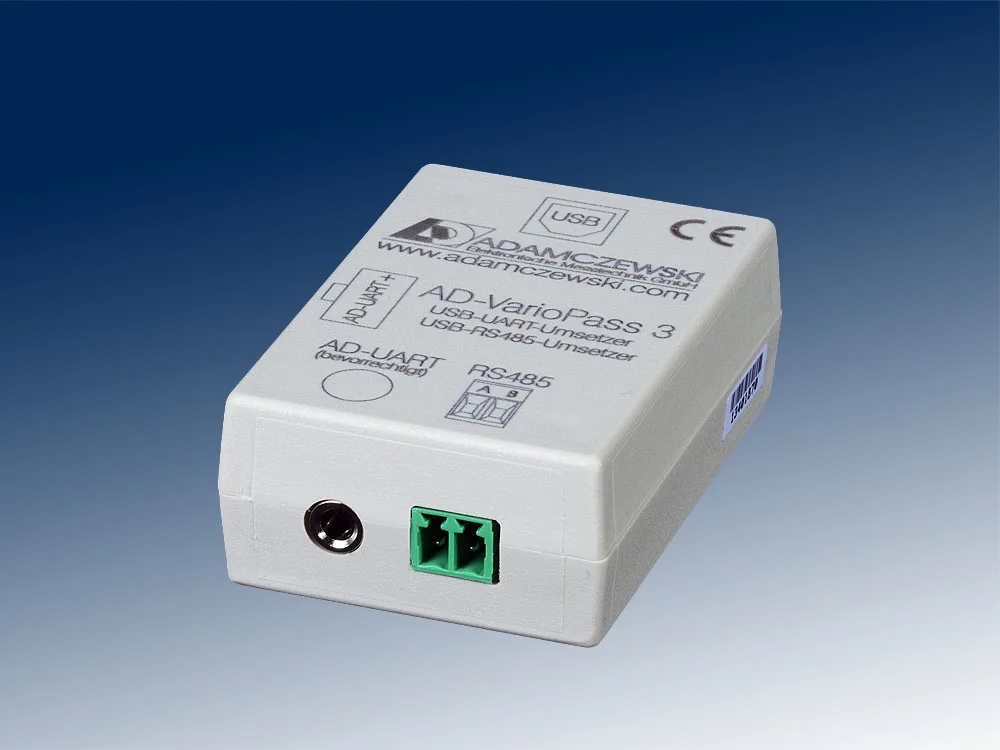
AD-VarioPass 3
Galvanically isolated USB configuration adapter for AD-UART, RS485 and UART+
RS485 busHandheld device
- Input
- Not specified
- Output
- Not specified
- Power supply
- via USB
- Housing type
- Not specified
Marked by the manufacturer as no longer available.
Ask us about a suitable replacement solution.
Advice on a successor model from Grubatec.
Model overview.
The AD-VarioPass 3 connects a PC via USB to digital Adamczewski devices with galvanic isolation, allowing configuration using AD-Studio. The appropriate AD-UART, RS485 or UART+ connection is selected to suit the base device; only one device interface may be used at a time.
| Manufacturer | Adamczewski Elektronische Messtechnik GmbH |
|---|---|
| Model | AD-VarioPass 3 |
| Function | Galvanically isolated USB configuration adapter for AD-UART, RS485 and UART+ |
| Input | Not specified |
| Output | Not specified |
| Power supply | via USB |
| Housing type | Not specified |
| Interface / protocols | AD-UART, RS485 bus, USB, Modbus-RTU |
| Design | Handheld device |
| Device functions | galvanic isolation (I/O) |
Further technical data for the device family
These details come from the manufacturer’s shared page for the device family. Where several versions exist, individual values apply only to the variant specified. The data sheet for your particular version is authoritative.
PC connection / power supply
| USB voltage range | 4.8 ... 5.2 V DC |
|---|---|
| Rated USB voltage | 5 V DC |
| Power consumption | < 1 W (depending on the output load) |
Device interface 1
| UART | Standard UART device interface for connecting most Adamczewski devices |
|---|
Device interface 2
| RS485 bus | RS485 bus interface for connecting bus-compatible devices |
|---|
Device interface 3
| UART+ | UART interface with integrated 5V supply |
|---|
Housing
| Dimensions (w×h×d) | 42x22x63 mm |
|---|---|
| IP rating | IP 20 |
| PC connection technology | USB interface |
| Interface 1 connection type | Jack plug (UART) |
| Interface 2 connection type | 2-way plug-in terminal (RS485) |
| Interface 3 connection type | 6-pin header (UART+) |
| Weight | ~ 50 g |
| Construction | Handheld housing |
Ambient conditions
| Ambient temperature | -10 ... 50 °C |
|---|---|
| Storage and transport | -10 ... 70 °C (avoid condensation) |
EMC
| Product family standard | EN 61326-1 1) |
|---|---|
| Emissions | EN 55011, CISPR11 class B, group 1 |
Electrical safety
| Product family standard | EN 61010-1 |
|---|---|
| Overvoltage category | II |
| Pollution degree | 2 |
Galvanic isolation, test voltages
| USB to outputs | 1 kV, 50 Hz (1 min.) |
|---|
Protective circuits
| USB | Protection against overvoltage |
|---|---|
| RS485 bus interface | Protection against overvoltage |
| Note | 1) Minor signal deviations may occur during interference. |
|---|
Explore further
Products in this category.
New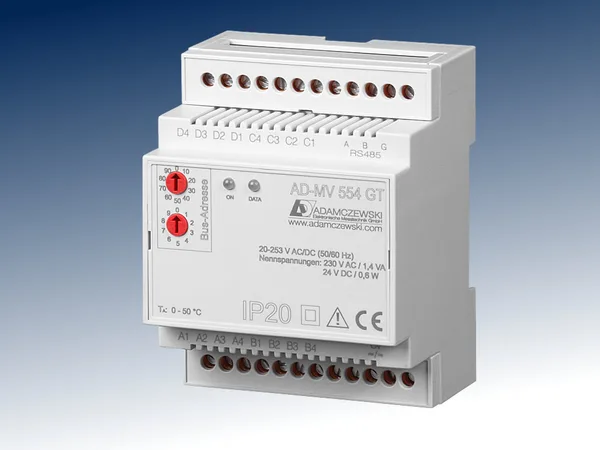 New
Fieldbus devices
AD-MV 554 GT
Four-channel temperature-to-bus converter for resistance sensors, thermocouples and mV signals
Fieldbus devices
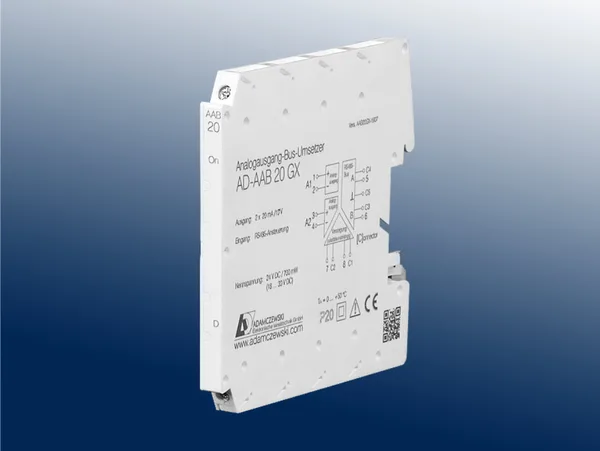
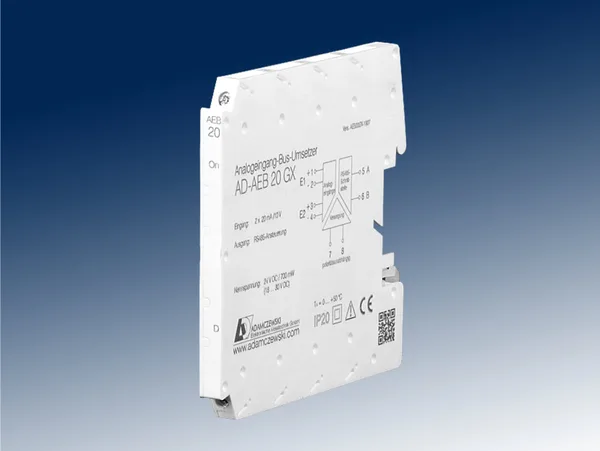
AD-AEB 20 GX
Two-channel signal converter with an RS485 bus interface and Modbus communication
Personal. Technical. Solution-focused.
Your measurement task deserves
the right solution.
Unsure about the input signal, output or version? Describe your application to us. Together, we will find the appropriate Adamczewski device.