GRUBATEC AG
Measurement & Control Technology

Preventing legionella in drinking water - how DAXTRO© technology helps
What are legionella bacteria and why are they dangerous?
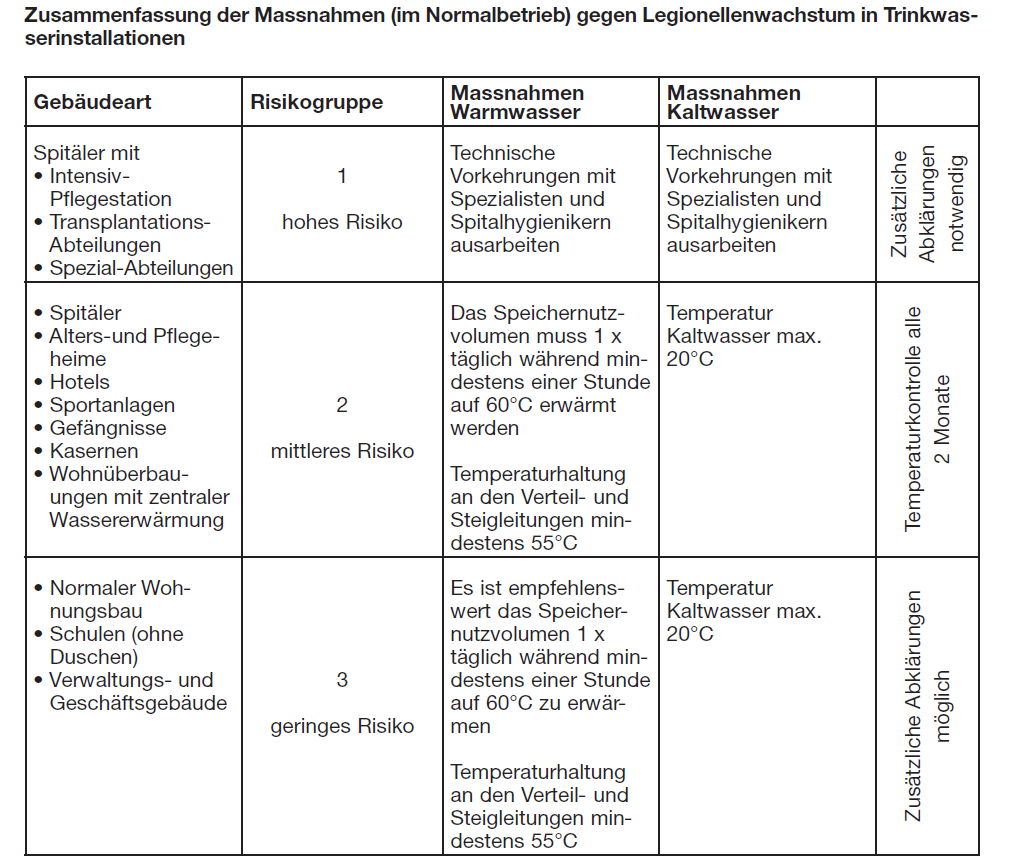
Legionella are bacteria that occur naturally in water. They are harmless in small quantities, but under certain conditions - for example at lukewarm temperatures between 25 and 50 °C and in stagnant water - they can multiply rapidly.
If legionella enter the lungs via the finest water droplets (aerosols), for example when showering, they can cause serious respiratory diseases. The best known of these is Legionnaires' disease, a dangerous form of pneumonia. Older people, smokers and people with a weakened immune system are particularly at risk.
How do legionella bacteria develop in the drinking water system?
Legionella bacteria spread primarily in calcified or rusted pipes and in biofilms - thin layers of microorganisms that adhere to the inner walls of pipes.
They find ideal conditions there: Nutrients, warmth and little water movement.
Particularly affected are:
-Hot water storage tank and boiler
- Shower heads and fittings
-Water pipes that are rarely used
-Refrigeration and air conditioning systems
How can legionella be prevented?
The most important measure is to remove legionella from its habitat:
But even with careful maintenance, limescale, rust and biofilm remain stubborn problems - and this is where DAXTRO© technology comes into play.
The DAXTRO© solution against legionella and more
The patented DAXTRO© technology "Made in Switzerland" uses special electrical impulses that change the structure of limescale crystals. As a result, they can no longer adhere to surfaces - and this in turn prevents the formation of limescale, rust and biofilm, i.e. the layers in which legionella bacteria particularly like to multiply.
This technology has been tested by independent, renowned institutes, including the National Reference Center for Legionella in Bellinzona (TI). The tests impressively demonstrate that legionella is completely eliminated within four hours.
How exactly does it work?
The DAXTRO© devices are fitted with ferrite cores that are mounted around the pipe in the form of a ring or two horseshoes.
These transmit a precise electromagnetic signal to the water. This changes the physical properties of the minerals contained in the water - without chemical additives, without maintenance and without interfering with the pipe system.
The result:
-Limescale and rust can no longer build up
-Biofilms are decomposed and broken down
-Legionella lose their habitat
Advantages of DAXTRO© technology
✔ S ustainable: no chemicals, no filters, no energy loss
✔ Maintenance-free: once installed, the system works permanently and reliably
✔ Proven to be effective: Scientifically tested and confirmed results
✔ Swiss quality: development, production and testing take place in Switzerland
Conclusion
Legionella is a serious but avoidable danger in drinking water systems.
DAXTRO© technology prevents their growth in a natural way - through physical water treatment that eliminates limescale, rust and biofilm before they even develop.
This not only keeps the drinking water clear and clean, but also hygienically safe - to protect people, health and the system