GRUBATEC AG
Measurement & Control Technology

What Can Be Done About Limescale in Water? When it comes to hard water, many homeowners first think of a traditional water softener. But if the goal is primarily to reduce stubborn limescale deposits, a salt-free limescale protection device can be an interesting and much simpler alternative.
A conventional water softener reduces water hardness. In this process, calcium and magnesium are partially replaced by sodium during ion exchange. This actually makes the water softer.
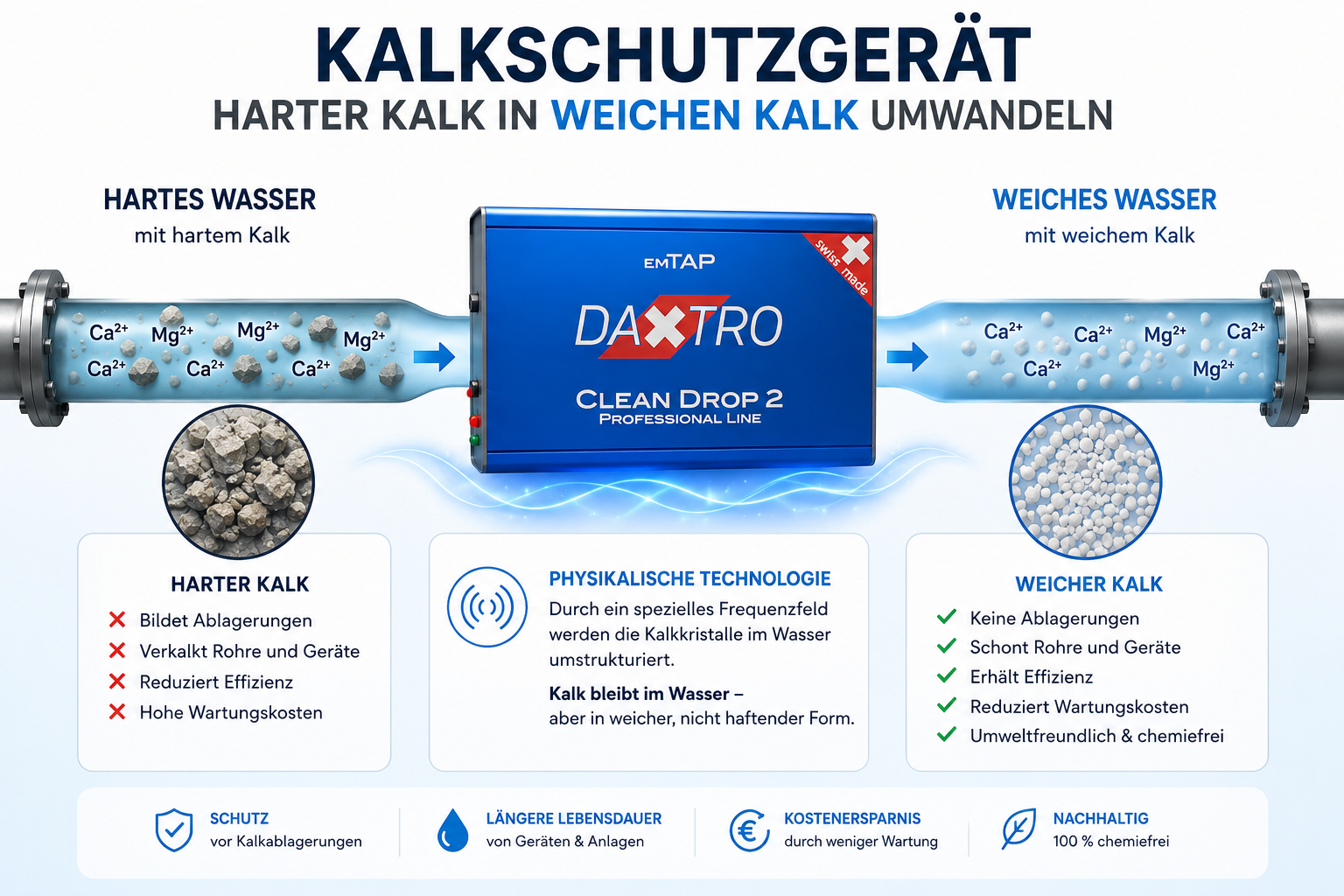
A limescale protection device, on the other hand, takes a different approach. Natural minerals such as calcium and magnesium remain in the drinking water. At the same time, limescale is supposed to build up less stubbornly on pipes, water heaters, faucets, and household appliances.
The big advantage is in everyday use: no regeneration salt, no need to refill salt, and no regeneration wastewater. In addition, the Daxtro scale protection device requires very little electricity.
Installation is also much easier. The Daxtro limescale protection device is mounted on the outside of a suitable water line. As a result, the installation effort in many existing homes is significantly less than that required for a traditional water softener.
The key factor is your goal: If you specifically want softer water, you’ll need a water softener. If, on the other hand, your main goal is to reduce limescale buildup and you want to avoid salt, regeneration, and the high installation costs, limescale protection may be the simpler solution.
If you want to reduce limescale buildup, you don't necessarily have to soften the water. Limescale protection offers a different approach and, at the same time, reduces many of the typical hassles associated with a traditional water softener.
Both systems have different objectives. Therefore, it is important to consider not only the purchase price but also the subsequent operation.
| Comparison | Daxtro Limescale Prevention Device | Conventional Water Softener |
|---|---|---|
| Regeneration salt | Not required | Generally required |
| Add salt | Not applicable | Required on a regular basis |
| Recovery wastewater | Not applicable | Occurs during the regeneration process |
| Calcium & Magnesium | Staying in the Water | During ion exchange, are partially exchanged for sodium |
| Water Hardness | Remains essentially unchanged | On sale |
| Installation effort | Low | Generally higher |
| Space requirements | Low | Additional space is required for the unit and the salt container |
| Ongoing Expenses | Very low | Salt, Regeneration, and Maintenance |
This is precisely where the key difference lies. If the goal is specifically to reduce water hardness, a water softener is the right technology. If, on the other hand, you primarily want to reduce limescale deposits and at the same time want to avoid regeneration salt, refilling salt, regeneration wastewater, and a complicated installation, a Daxtro limescale protection device can be the significantly simpler alternative.